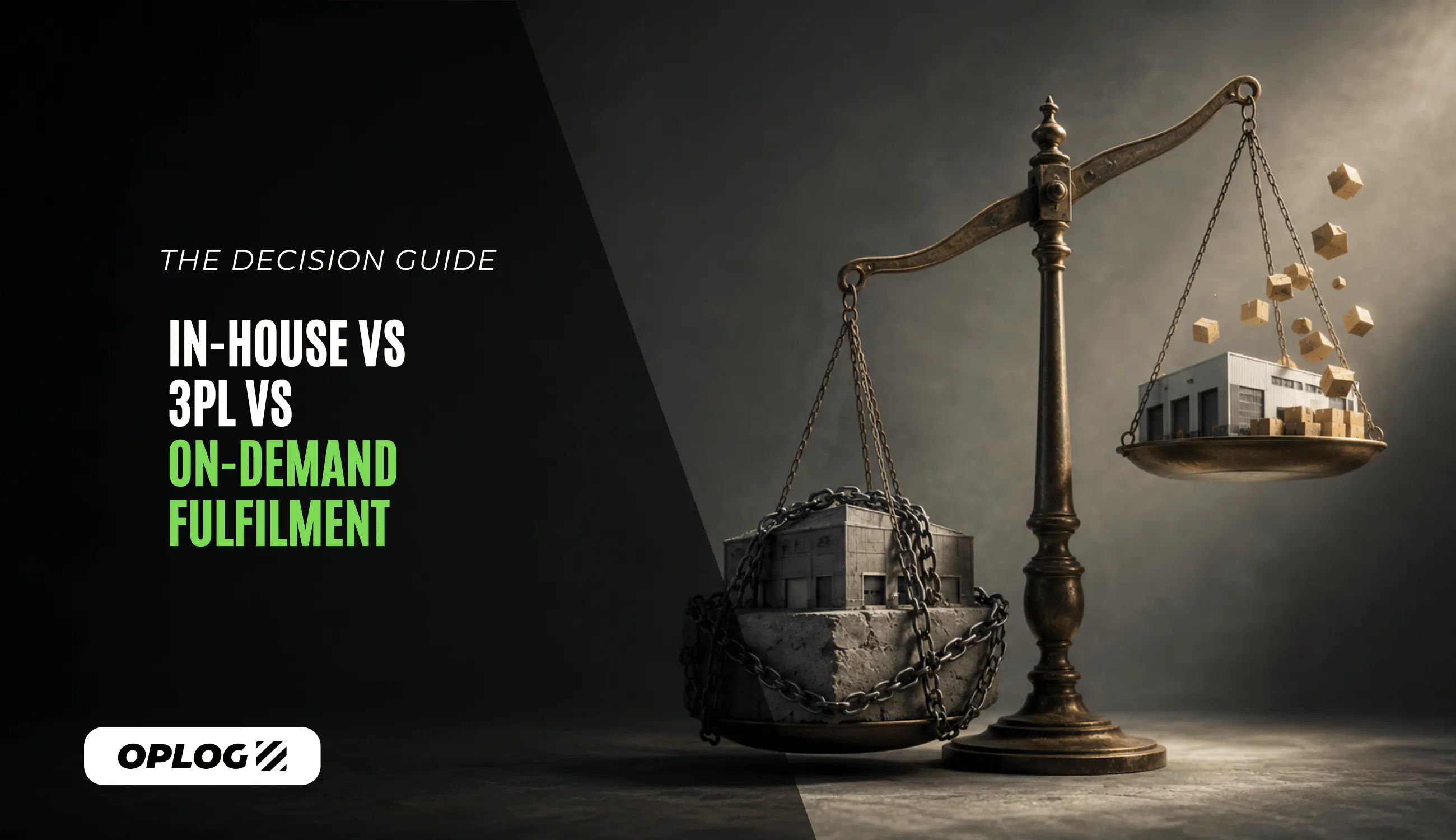
Every scaling ecommerce brand reaches a point where the way it handles fulfilment stops being an operational detail and becomes a strategic decision. Keep it in-house? Hand it to a traditional 3PL? Or move to an on-demand model that flexes with demand?
The choice shapes your cost structure, your ability to scale and how much capital stays locked in warehouses instead of funding growth.
The difficulty is that these three options are rarely compared on equal terms. In-house is defended on the grounds of control, 3PL services are chosen because "that is what everyone does", and on-demand is often not considered at all because the category is newer.
This guide sets the three side by side from an operations and leadership perspective, so the decision rests on total cost and flexibility rather than habit. The aim is not to crown one model as universally best, but to show which model fits which set of conditions.
First, What Are We Actually Comparing?
Before weighing the options, it helps to define them, because the language around logistics is loose and the differences matter.
In-house fulfilment means you run the operation yourself: your warehouse, your staff, your systems, your equipment. You own the whole process end to end.
Third-party logistics, or 3PL, means you outsource fulfilment to an external provider. But "what is 3PL" is a broader question than most brands assume, because the term covers very different commercial models.
A traditional contract 3PL works on long-term agreements with dedicated space and staff. Third party logistics providers of this kind bill on a largely fixed basis, whether or not you use the capacity you have reserved.
On-demand fulfilment is a variable-cost model. You pay for the operation that actually happens, storage for what you store and fulfilment for what you ship, with no long-term commitment and no dedicated capacity sitting idle.
It is still a form of outsourcing, but its economics are the opposite of a traditional contract. In practice, this means on-demand 3PL services behave very differently on your P&L than the contract model most brands picture when they hear the term.
The critical insight is this: the real decision is not "in-house or outsource". It is which cost structure you want to live with. Both in-house and traditional 3PL services tend to be fixed-cost models.
On-demand is variable. That distinction, more than any brand name in a list of 3PL companies, determines what fulfilment will cost you over time.
In-House Fulfilment: The Real Price of Control
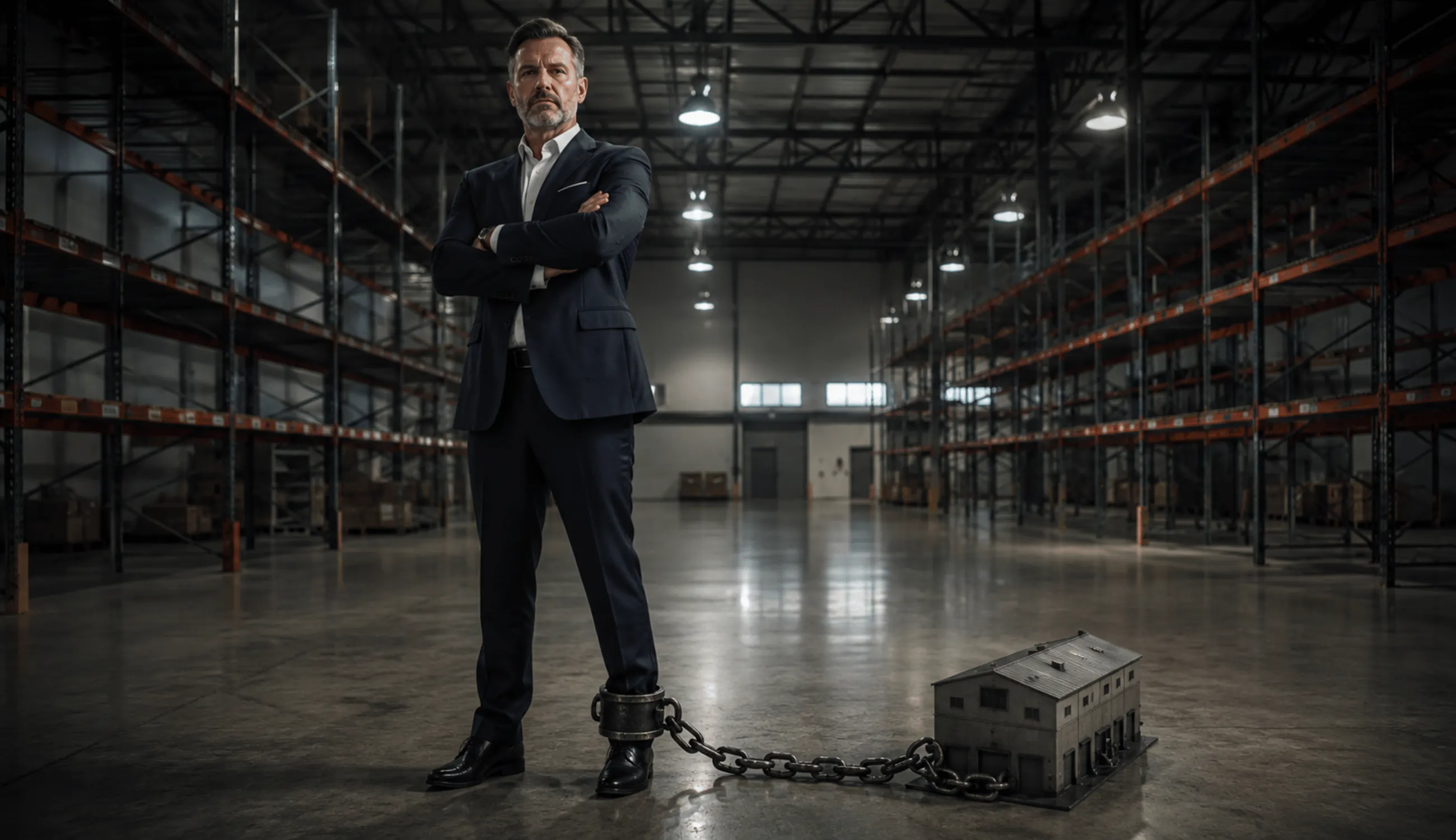
The strongest argument for in-house is control. Your team, your processes, your standards, with no intermediary margin. For brands where fulfilment is a genuine point of differentiation, that control has real value.
But control has a price, and it is usually undercounted. The structural weakness of in-house is that cost is fixed.
Your warehouse pays the same rent in your quietest month as it does during peak. In the low season you pay for half-empty shelves; in peak, capacity runs short and overtime and temporary-staff costs spike. Fixed cost cannot flex to variable demand, so the model itself generates inefficiency.
Capital is the second cost. Money tied up in warehousing, racking and equipment is money that could fund product, marketing and expansion.
Boards increasingly ask whether the warehouse is genuinely the best use of capital or an asset sitting idle on the books.
Third comes the scaling ceiling. In-house runs efficiently up to a point, but once growth accelerates, each new increment of capacity demands fresh investment: a bigger site, more staff, a second location for a new region.
These costs arrive in jumps rather than smooth steps, forcing large capital decisions at awkward moments and straining cash flow. For most growing brands, this step-change structure is the hidden tax of running warehousing services in-house.
Traditional 3PL: Outsourced, But Still Fixed
Handing fulfilment to a traditional 3PL feels like the obvious fix. The invoice is clear, the responsibility sits outside your walls, and the operation is in professional hands. For many brands, third party logistics providers solve the immediate headache of running a warehouse. But the classic contract model carries its own structural costs.
Contract 3PL has sharp corners, and four traps recur. The first is minimum volume commitments: you commit to a floor and pay it in full even in a slow month, so you pay for volume you never sold.
The second is dedicated resource: the space and staff assigned to you cost money whether you use them or not, so idle-capacity risk stays with you. The third is long-term lock-in, where three to five year contracts erode your negotiating power.
The fourth is rigid pricing, where anything outside the agreement is an extra charge and the familiar reply is "that is not in your contract".
Beneath these lies a problem of incentives. A traditional 3PL earns a fixed fee, so its revenue does not fall when your sales do, and any efficiency it finds stays in its margin rather than yours. Its strongest motivation becomes protecting the contract, not driving your cost down. This is why comparing 3PL companies purely on unit rate misses the point. Two providers can quote similar rates while offering completely different total costs, because the commitment structure, not the headline price, is what drives your spend. Choosing the right 3PL provider means reading the model, not the rate card.
On-Demand Fulfilment: Paying for What You Use
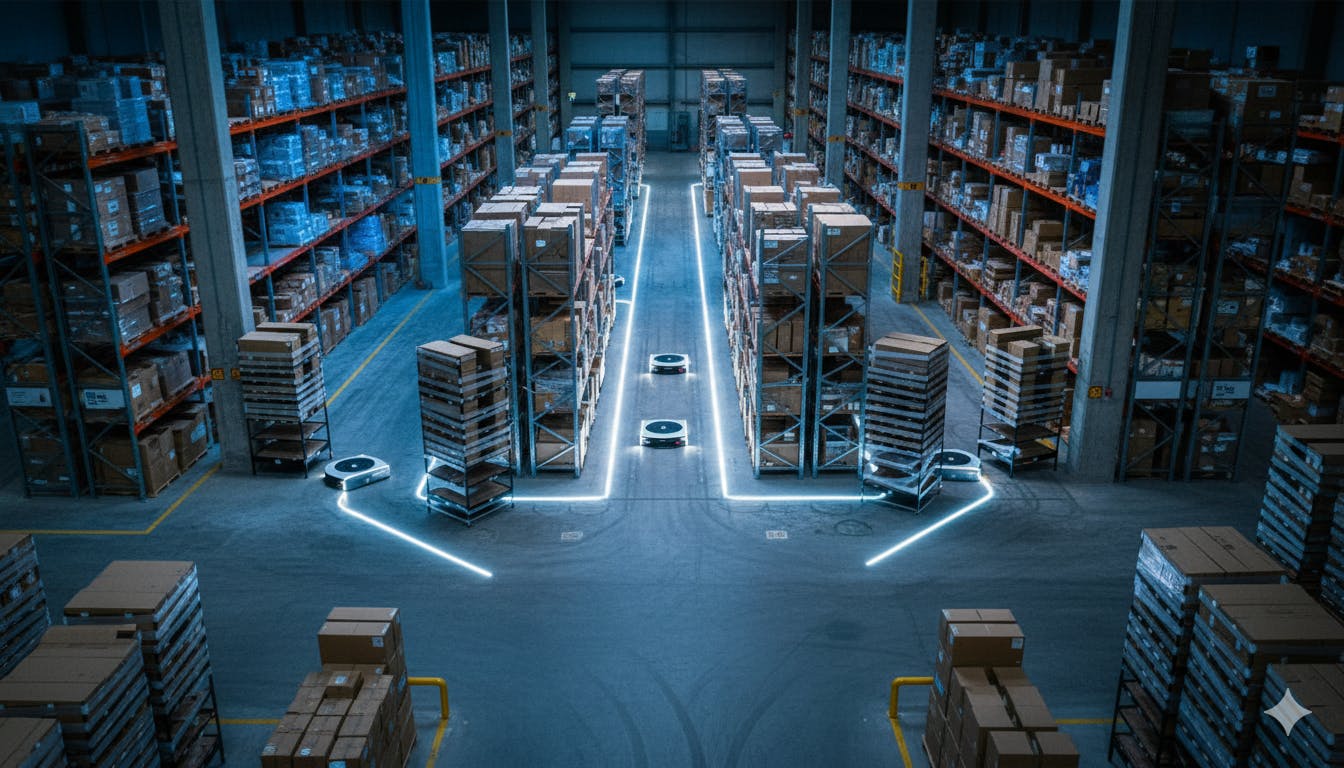
The third option changes the economics rather than just the provider. On-demand fulfilment is built on a simple principle: you pay for the operation that actually happens. Storage for what you store, fulfilment for what you ship, and nothing for capacity you do not use.
For an operations leader, the implications are significant. It turns fixed cost into variable cost, so logistics spend moves with sales instead of sitting as overhead. In the low season you pay less; in peak, capacity expands without a capital project.
Idle-capacity risk disappears because you are not paying for empty space. And because there is no long-term commitment, you keep your negotiating power and can start with a pilot to contain risk.
This is the model OPLOG is built on. Its pay-as-you-go structure has two core charges, storage and fulfilment, tied to actual operation rather than headcount or reserved space.
What makes the economics work is a customer-agnostic model: multiple brands share the same infrastructure, so one client's quiet season offsets another's peak, occupancy rises and unit cost falls. Where a dedicated model often runs at around 40% occupancy, shared infrastructure can push well above 80%, and that difference flows straight into your total cost.
On-demand order fulfilment services are not simply a cheaper 3PL; they are a structurally different way to buy logistics.
What Actually Drives Down Total Cost
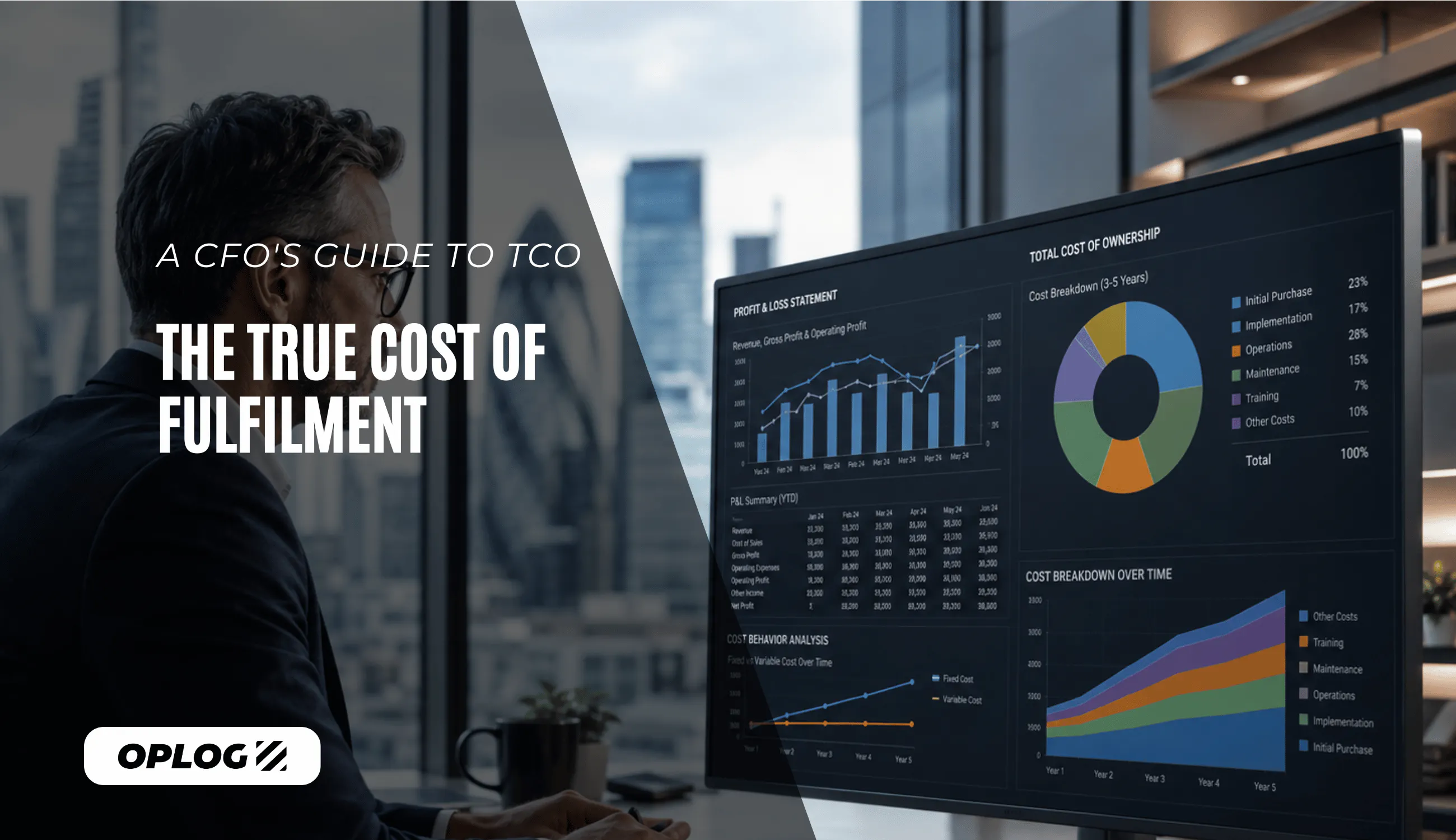
None of these models should be judged on unit rate alone. The real comparison is total cost of ownership, and the biggest lever on it is how resources are used and how technology is applied.
Shared infrastructure is the first lever. A customer-agnostic operation raises occupancy and spreads fixed costs across many brands, which no single-tenant in-house or dedicated 3PL setup can match. Higher occupancy means lower unit cost, structurally rather than through negotiation.
Technology is the second. OPLOG's AI-native infrastructure, including shelf-carrying autonomous mobile robots and a platform that gives real-time operational visibility, makes the operation faster, more accurate and more predictable.
The point is not the robot but the benefit: higher order accuracy reduces refund and re-ship costs, faster throughput improves customer satisfaction and repeat purchase, and better labour productivity lowers the cost per order. Each of these shrinks the hidden-cost layer that never shows up on a standard invoice.
Put shared infrastructure and AI-native operations together with variable pricing, and you get a meaningful reduction in total cost, along with something just as valuable to an operations team: a cost that is finally visible and predictable.
A Decision Framework for Operations and Leadership

A practical way to choose runs in three steps.
First, calculate the true total cost of your current model across four layers: direct costs (invoice, rent, staff, equipment), indirect costs (management time, IT, insurance, training), hidden costs (mis-ships, returns, stock discrepancies) and opportunity or risk costs (idle capacity, tied-up capital, lost flexibility). This total, not the invoice, is your real baseline.
Second, clarify your constraints. Do you own or lease your warehouse? Is there significant sunk investment in the current site? Is your contract ending soon?
These answers determine which outsourced model is even viable, and whether a move means relocating to a provider's site or having a provider take over operations at your own facility.
Third, prioritise flexibility. If your demand is seasonal, your growth ambitious, or your capital better spent on the core business, a variable-cost, commitment-free model offers a clear advantage over fixed-structure alternatives.
Worked through honestly, this framework moves the decision away from "in-house versus outsource" and toward the question that actually matters: which model gives you the lowest total cost and the highest flexibility for your specific situation? Comparing named 3PL companies is a far weaker starting point than comparing cost structures.
Conclusion: Choose the Cost Structure, Not the Label
In-house, 3PL and on-demand are not three points on a single scale from "more control" to "less control". They are three different cost structures. In-house and traditional 3PL services are largely fixed, paying out regardless of what you sell. On-demand fulfilment is variable, moving with your revenue and freeing the capital that fixed models lock away.
The right decision starts with data: the true total cost of your current model, your real constraints, and how much flexibility your growth demands. Compared on those terms rather than on brand names or headline rates, the choice becomes far clearer.
OPLOG's approach rests on turning fixed cost into variable cost, raising occupancy through shared infrastructure and using technology to make the operation both cheaper and more visible. To see how your current model compares, you can request a cost and fulfilment analysis.
FAQ