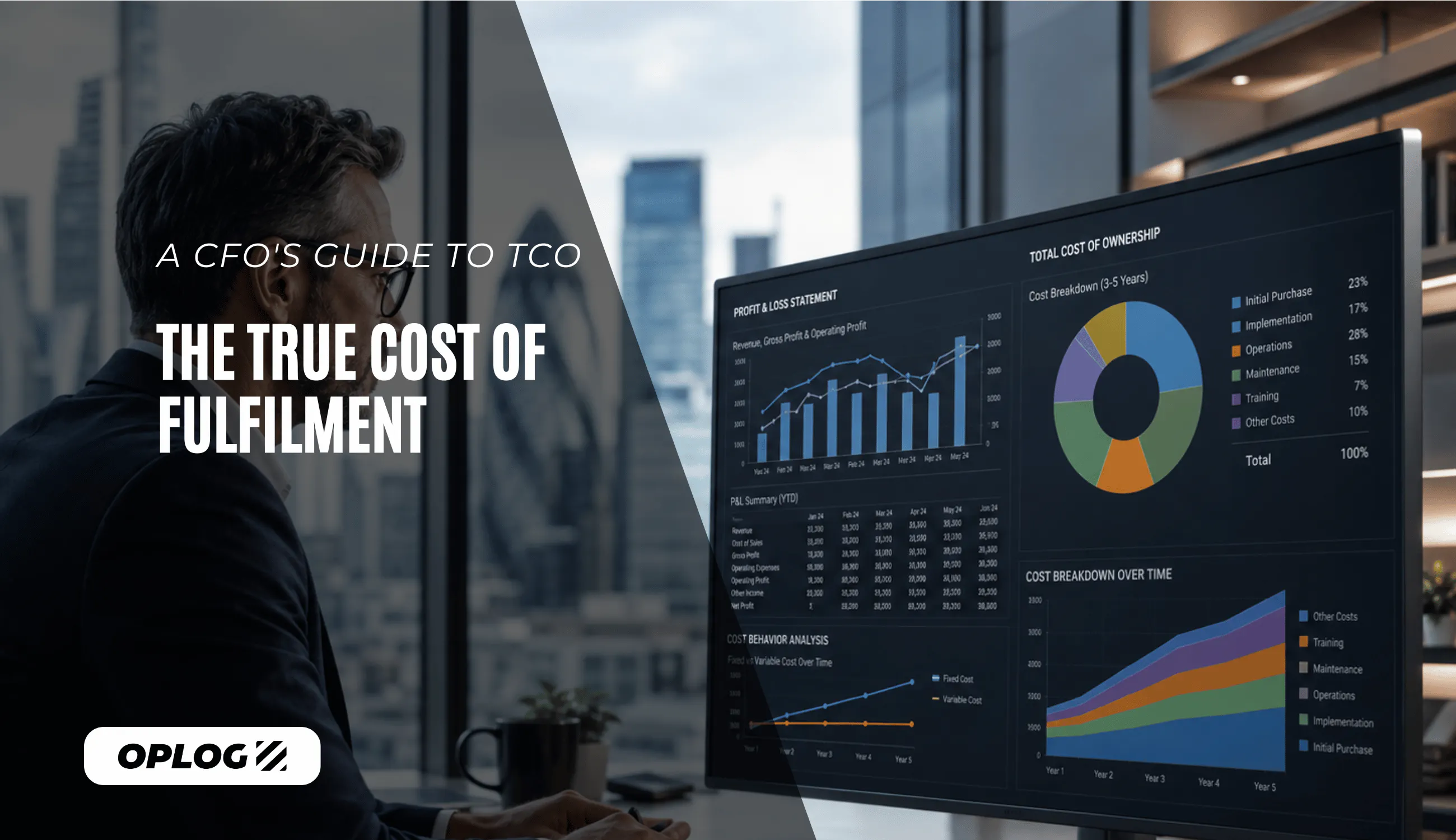
Most finance leaders can tell you what they pay their fulfilment provider each month. Far fewer can tell you what fulfilment actually costs the business. The invoice is only the visible layer. Beneath it sits a set of expenses that never appear under a single line: idle capacity, peak-season overtime, mis-ship refunds, returns processing, stock discrepancies, tied-up capital and management time. When you add these up, the gap between the number on the P&L and the true cost of moving your products can be substantial.
This guide takes a finance and board-level view. The goal is not to negotiate a lower unit rate. The goal is to make the total cost of ownership (TCO) visible, because every conversation about shipping costs that stops at the invoice misses the larger picture. For UK and European ecommerce brands operating in a market of rising warehouse rents, volatile carrier surcharges and unpredictable demand, understanding true TCO is the difference between managing fulfilment and being managed by it.
Why Fulfilment Costs Look Lower Than They Are

Ask a growing brand what fulfilment costs, and you will usually get one of two answers: the monthly 3PL invoice, or the direct running costs of an in-house operation. Both are incomplete.
The root of the problem is that logistics spend scatters across the business. Warehouse rent sits under property, staff under payroll, carriage under cost of goods sold, and returns losses somewhere else entirely. Because of this, shipping costs never appear as a single, comparable figure. No single dashboard answers the question a CFO actually needs answered: what does fulfilment cost us in total?
The second reason is that hidden costs are, by nature, invisible. When an order ships to the wrong address, it costs customer-service time, a re-shipment carriage charge and a dent in brand trust. None of it gets logged under "fulfilment". The same is true of idle space. The warehouse you rent year-round still charges full rent in your quietest month, and that unused capacity is a real cost leaving your account whether the invoice names it or not.
For UK brands, the picture is sharper still. Carrier price rises, fuel and handling surcharges, and the steady climb in warehouse rents all push a fixed logistics structure to cost more each year. In an inflationary environment, locking yourself into a fixed-cost model is a risk that grows quietly on the balance sheet. Many operators discover too late that their logistics strategy has been eroding margin without ever showing up as a distinct problem.
Total Cost of Ownership: The Four Layers
Total cost of ownership is the sum of everything a fulfilment model costs you over its lifetime, not just the portion that gets billed. When finance looks at shipping costs properly, this is the frame it needs. TCO breaks into four layers.
Direct costs. The billed items: storage (warehouse space), fulfilment (picking, packing) and carriage. In an in-house model, the equivalents are rent, wages and equipment depreciation. This is the layer most brands stop at.
Indirect costs. The expenses surrounding the operation that are easy to overlook: management and oversight time, IT and system maintenance, insurance, training, health and safety, and the cost of staff turnover.
Hidden costs. Losses born of error and inefficiency, often never measured at all: refunds for wrong or incomplete shipments, returns processing, stock shrinkage and count discrepancies, and customers lost to late delivery.
Opportunity and risk costs. The most frequently ignored layer: capital tied up in idle capacity, the capacity crises that hit during peak, the ceiling a rigid infrastructure places on growth, and the flexibility destroyed by long-term commitments.
Add these four layers together and the figure surprises most executives. The conversation almost always centres on the first layer, while the other three are quietly written off as "the cost of doing business". They are not. They are managed cost, and the first step to managing them is seeing them.
Is In-House Really Cheapest?
"We own our warehouse, we have our own team, so we must be the cheapest" is the most common fallacy in fulfilment finance. The logic looks sound at first glance: no intermediary margin, full control.
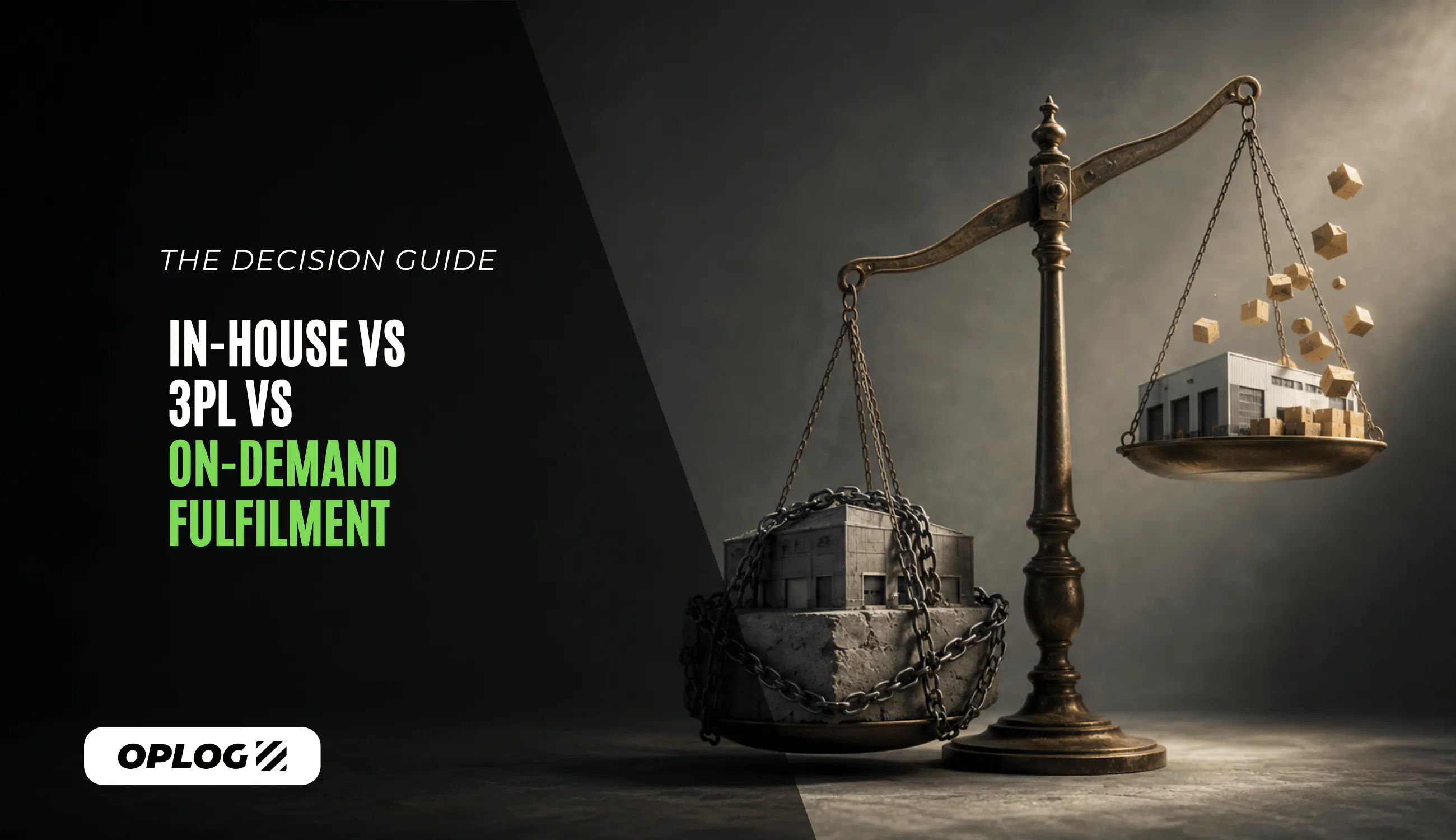
But once the true fulfilment pricing of an in-house operation is accounted for, the picture changes. The structural weakness of in-house is that cost is fixed. Your warehouse pays the same rent in January as it does during your November peak. In the low season, you pay full rent for half-empty shelves. In peak, capacity runs short and overtime and temporary-staff costs spike. Fixed cost cannot flex to meet variable demand, so the model itself becomes a source of inefficiency.
Then there is capital. The money tied up in your warehouse, racking and equipment is money that could fund your product, your marketing, your growth. A brand's real value lives in its product and its customer relationship, not in its square metres. Boards and investors increasingly ask the same question: is this warehouse genuinely the best use of capital, or an asset sitting idle on the books?
In-house also carries a scaling ceiling. An operation runs efficiently up to a point, but once growth accelerates, every new increment of capacity demands fresh investment: a bigger warehouse, more staff, a second site for a new region. These costs arrive in jumps, not smooth steps. You cope up to a threshold, then a large capital decision is suddenly forced on you. This step-change structure is what strains a growing brand's cash flow most. When you calculate the genuine cost, the assumption that in-house is cheapest rarely survives contact with the real numbers.
The Trap of Contract Logistics
The classic alternative to in-house is contract logistics: long-term agreements with traditional providers. The invoice is clear and the responsibility sits outside your walls, which makes it feel like a clean solution. But its cost structure, and its effect on flexibility, quietly pushes TCO upward.
Contract logistics has sharp corners. Four traps recur. The first is minimum volume commitments: you commit to a volume floor and pay it in full even in a slow month when you never reach it, meaning you pay for months you did not sell. The second is dedicated resource: the space and staff assigned to you are a cost whether you use them or not, so the risk of idle capacity stays with you rather than the provider. The third is long-term lock-in: three to five year commitments erode your negotiating power and room to manoeuvre. The fourth is rigid pricing: anything outside the contract is an extra charge, and the familiar answer becomes "that is not in your contract".
The deeper issue is misaligned incentives. A traditional 3PL earns a fixed fee, so its revenue does not fall when your sales do. Any efficiency saving it finds stays in its pocket, not yours. In that structure, the provider's real motivation is to protect the contract, not to innovate. The true cost of contract logistics is the flexibility it removes and the opportunity cost that follows.
From Fixed Cost to Variable Cost
Once the TCO frame is clear, the decisive question emerges: how much of your fulfilment cost moves with your sales, and how much stays fixed regardless? For most brands, the bulk of their shipping costs are locked in as fixed overhead long before a single order ships.
The shared weakness of both in-house and contract logistics is that cost is largely fixed. Rent, commitments and dedicated resource are paid whatever your sales do. Ecommerce volume, by contrast, is inherently variable, shaped by seasons, campaigns and product cycles. A fixed-cost structure cannot follow that curve, so you overpay in the trough and hit a capacity crisis at the peak.
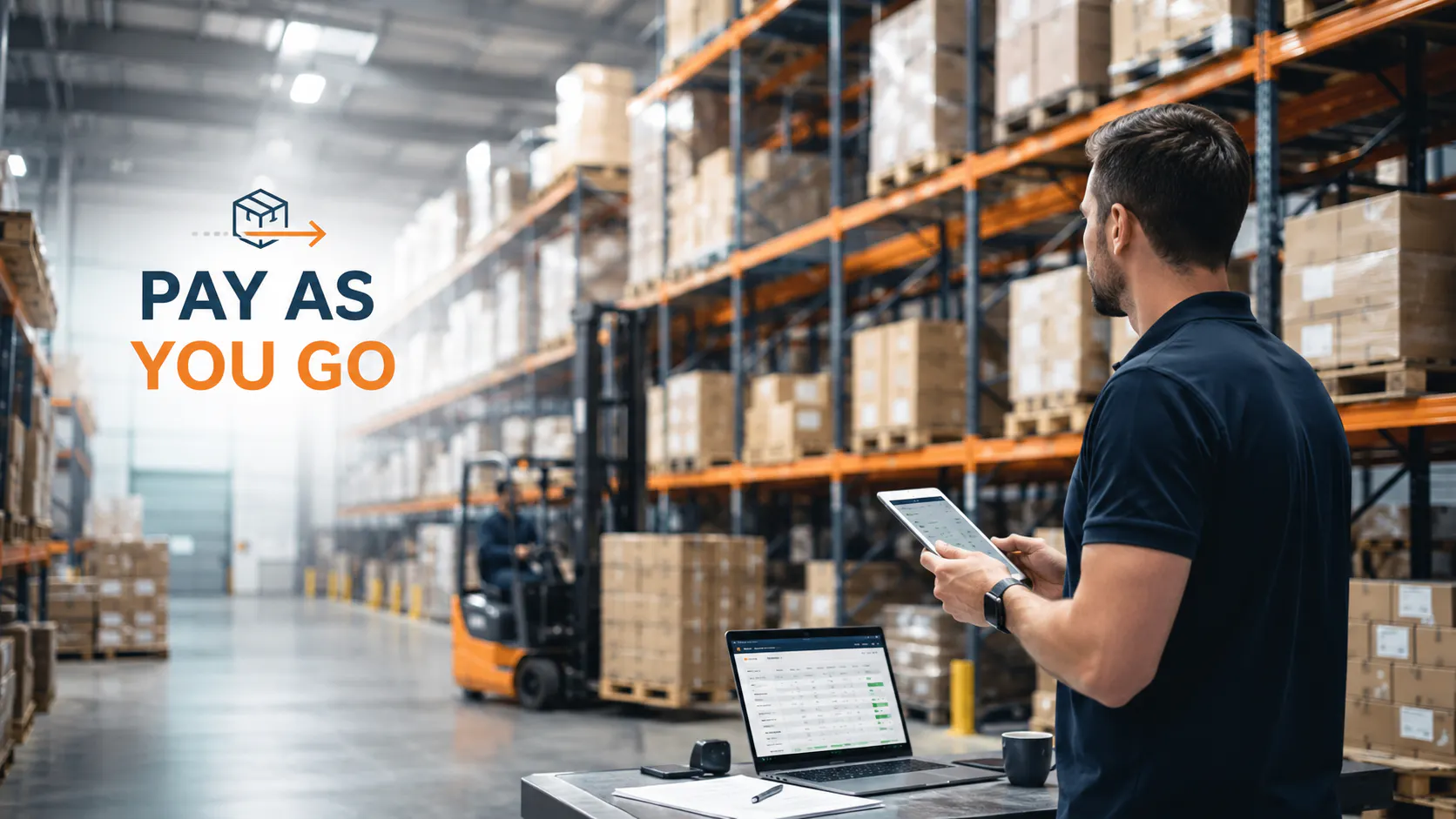
A variable-cost model inverts the equation. The logic is simple: you pay for the operation that actually happens. Storage for what you store, fulfilment for what you ship. You do not pay for capacity you do not use. This makes the logistics budget predictable and ties it directly to revenue.
This is the model OPLOG is built on: pay-as-you-go. There are two core charges, storage and fulfilment, and payment is tied to the operation that actually occurs rather than to headcount or dedicated space. There is no long-term commitment, and you can start with a pilot to keep risk contained. For finance, the meaning is direct: it turns fixed cost into variable cost, removes idle-capacity risk and frees up capital. A model that flexes with demand turns fulfilment from an unpredictable fixed burden into a manageable, revenue-linked line.
What Actually Lowers TCO: Shared Infrastructure and Technology
Variable pricing alone is not the whole story. The structural saving comes from how resources are used.
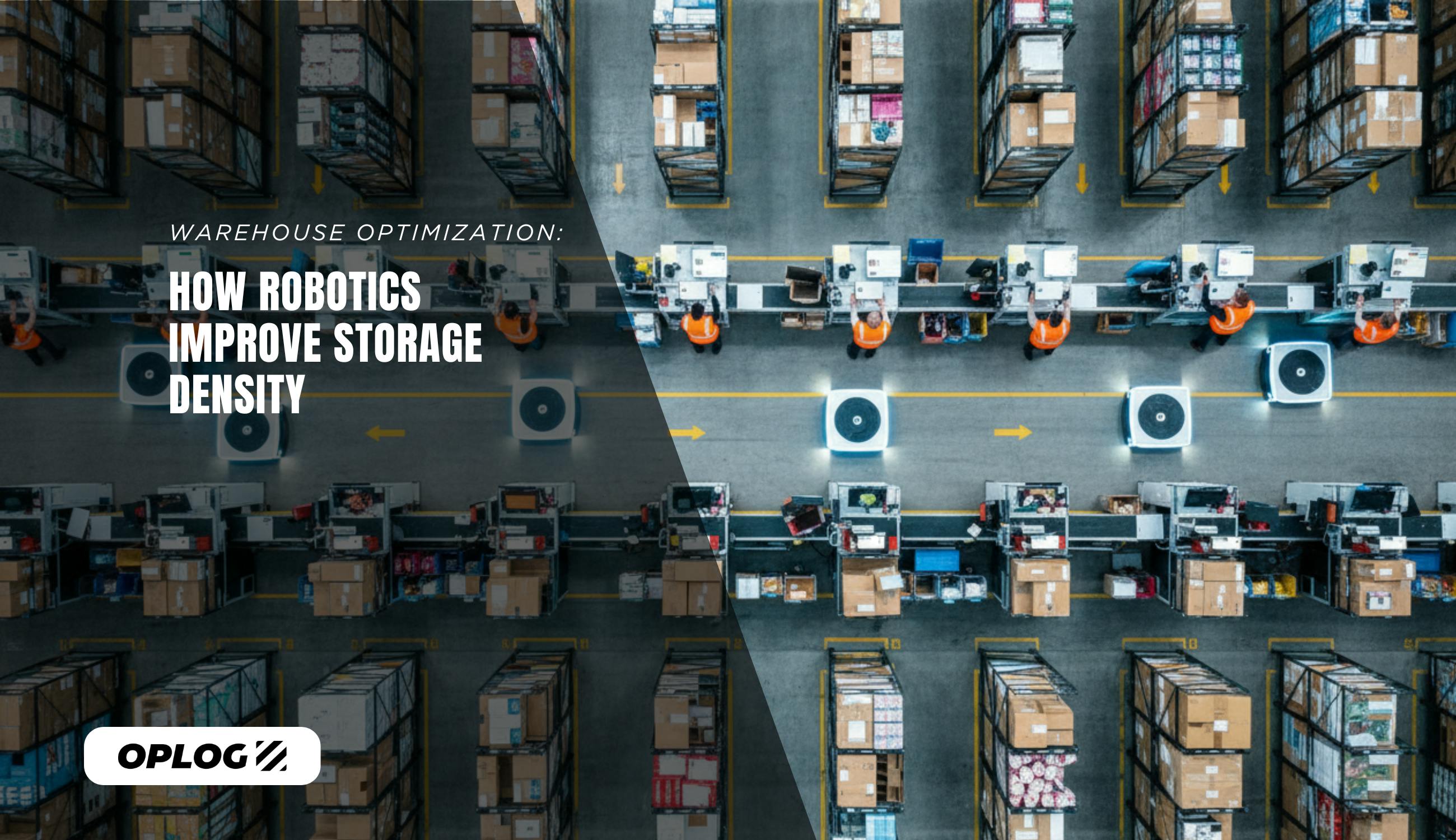
In a traditional model, each client gets dedicated space, staff and equipment. In a customer-agnostic model, multiple clients share the same infrastructure. The economics of this are powerful: one client's low season offsets another's peak, occupancy rises, and unit cost falls. Where 40% occupancy is normal in a dedicated model, a shared infrastructure can push well above 80%. That difference flows straight into TCO. Customer-agnostic distribution is one of the clearest levers a brand has for reducing total cost without cutting service.
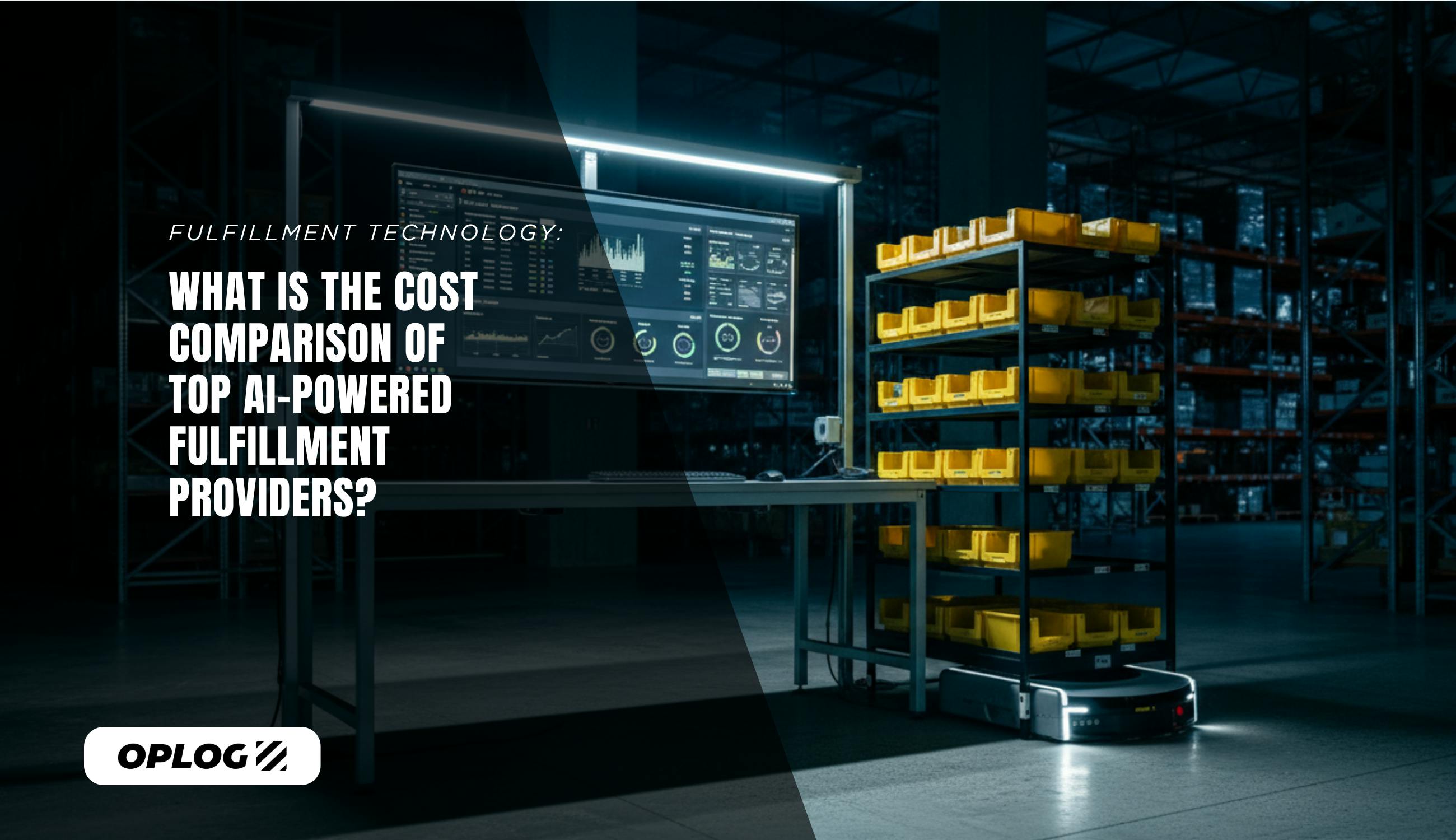
Technology deepens the saving. OPLOG's AI-native infrastructure, including shelf-carrying autonomous mobile robots and a platform that provides real-time operational visibility, makes the operation faster, more accurate and more predictable. The message here is not the robot itself but the benefit it creates: higher order accuracy (lower refund cost), greater speed (better customer satisfaction and repeat purchase) and improved labour productivity. Each of these shrinks the hidden-cost layer.
Bring these elements together, variable pricing, shared infrastructure and AI-native operations, and you get a meaningful reduction in total cost of ownership. The promise is not "our unit rate is cheaper", because unit rates are often similar. The promise is a lower total cost, and just as importantly, a cost that becomes visible and manageable.
How to Start a TCO Analysis
To see your real fulfilment cost, the first step is to total all four layers. A practical starting framework: add up the direct costs (invoice, rent, staff, equipment), then the indirect items (management time, IT, insurance, training, turnover), then attempt to measure the hidden costs (refunds, returns processing, stock discrepancies, losses from late delivery), and finally assess opportunity and risk (idle capacity, tied-up capital, lost flexibility).
That total is the true TCO of your current model. Run the same calculation for an alternative model, one that is variable-cost and built on shared infrastructure, and the gap between the two becomes the basis for your decision. What matters is comparing total pictures, not unit rates.
For the analysis to be sound, you need the right data. Because most hidden costs go unmeasured, you may have to work with estimates at first, but even an estimate beats no calculation at all. Seeing your genuine fulfilment cost is, for most finance teams, a bigger revelation than the decision that follows it.
Conclusion: See It First, Then Decide
The first step in managing fulfilment cost is seeing it clearly. The invoice tells only the visible part of the story. The real cost hides in the sum of hidden and opportunity costs. Once you calculate total cost of ownership, both the "in-house is cheapest" and the "contract logistics is safe" assumptions tend to fall apart.
The real question is not how to shave the unit rate. It is this: is fulfilment an unpredictable fixed burden on your balance sheet, or a visible, flexible line that moves with your sales? The answer defines your logistics strategy.
OPLOG's approach rests on this frame: making true TCO visible, turning fixed cost into variable cost, and using technology to shrink hidden costs. To calculate your business's real fulfilment cost and compare it against your current model, you can request a cost analysis.
FAQ