The ecommerce landscape has fundamentally shifted. While brands once competed primarily on product quality and price, today's battleground exists in the final stretch between warehouse and doorstep. Last mile fulfilment has become the make-or-break factor determining whether customers return or disappear to competitors.
Here's what many ecommerce businesses get wrong: they obsess over negotiating pennies off shipping rates while their customers silently abandon them for brands that deliver faster. The data tells a compelling story—96% of consumers who experience positive delivery become repeat shoppers. That statistic alone should reshape how every online retailer thinks about their fulfilment strategy.
Understanding Last Mile Fulfilment in Modern Ecommerce
Last mile fulfilment represents the final segment of the delivery journey, moving products from distribution centres to customers' doorsteps. Despite covering the shortest physical distance, this phase accounts for approximately 53% of total shipping costs. The complexity stems from multiple factors: urban congestion, tight delivery windows, individual address routing, and the sheer unpredictability of residential deliveries.
For ecommerce businesses, mastering this final stretch requires more than simply choosing a last mile carrier. It demands an integrated approach connecting inventory management, warehouse operations, and carrier networks into a seamless system capable of responding to customer expectations in real time.
The global last mile delivery market reached approximately £161 billion in 2024 and continues expanding at nearly 10% annually. This growth reflects both the explosion in ecommerce order volumes and rising consumer demands for faster, more transparent delivery experiences. Businesses that fail to align their fulfilment capabilities with these expectations risk permanent market share losses.
Why Fulfilment Speed Creates Lasting Customer Loyalty

Consumer expectations have evolved dramatically. Research indicates that 66% of shoppers now expect same-day delivery options, particularly for online purchases. This shift represents more than impatience—it reflects how market leaders have conditioned buyers to expect immediate gratification.
The relationship between ecommerce delivery speed and customer satisfaction extends beyond the initial purchase. Fast, reliable fulfilment creates emotional connections with brands. When orders arrive promptly, customers feel valued and respected. This emotional response translates directly into loyalty metrics: increased repeat purchase rates, higher lifetime values, and organic referrals.
Conversely, delivery failures create disproportionate damage. Approximately 5% of last mile deliveries fail on first attempt, each failure costing businesses an average of £14-18 in direct expenses. But the hidden costs prove far more significant—frustrated customers rarely complain directly. They simply never return.
The mathematics of customer retention make a compelling case for prioritising speed over marginal cost savings. Acquiring new customers costs five to seven times more than retaining existing ones. If faster fulfilment improves retention by even small percentages, the return on investment vastly exceeds any savings achieved through slower, cheaper delivery options.
The True Cost of Prioritising Cheap Shipping Over Speed
Many ecommerce managers fall into a familiar trap: they negotiate aggressively for lower carrier rates, believing they're optimising costs. The spreadsheet logic seems sound—reduce per-package expenses and watch margins improve. Yet this approach ignores the complete picture of fulfilment economics.
Consider what happens when a customer's order takes seven days instead of two. During that waiting period, buyer's remorse can set in. The excitement that drove the purchase fades. When the package finally arrives, the experience feels anticlimactic rather than delightful. The likelihood of that customer making another purchase drops significantly.
Slow delivery also creates operational burdens that inflate hidden costs. Extended transit times generate more customer service inquiries. Each tracking question consumes support resources. Each complaint requires handling. Companies focused narrowly on shipping rates often find their customer service expenses climbing faster than their delivery savings.
Modern consumers have access to countless alternatives. When delivery disappoints, they don't write angry emails—they quietly shift their spending to competitors who deliver faster. The lost lifetime value from these silent defections dwarfs any savings achieved through bargain-basement shipping rates.
How Same-Day Dispatch Transforms Ecommerce Performance
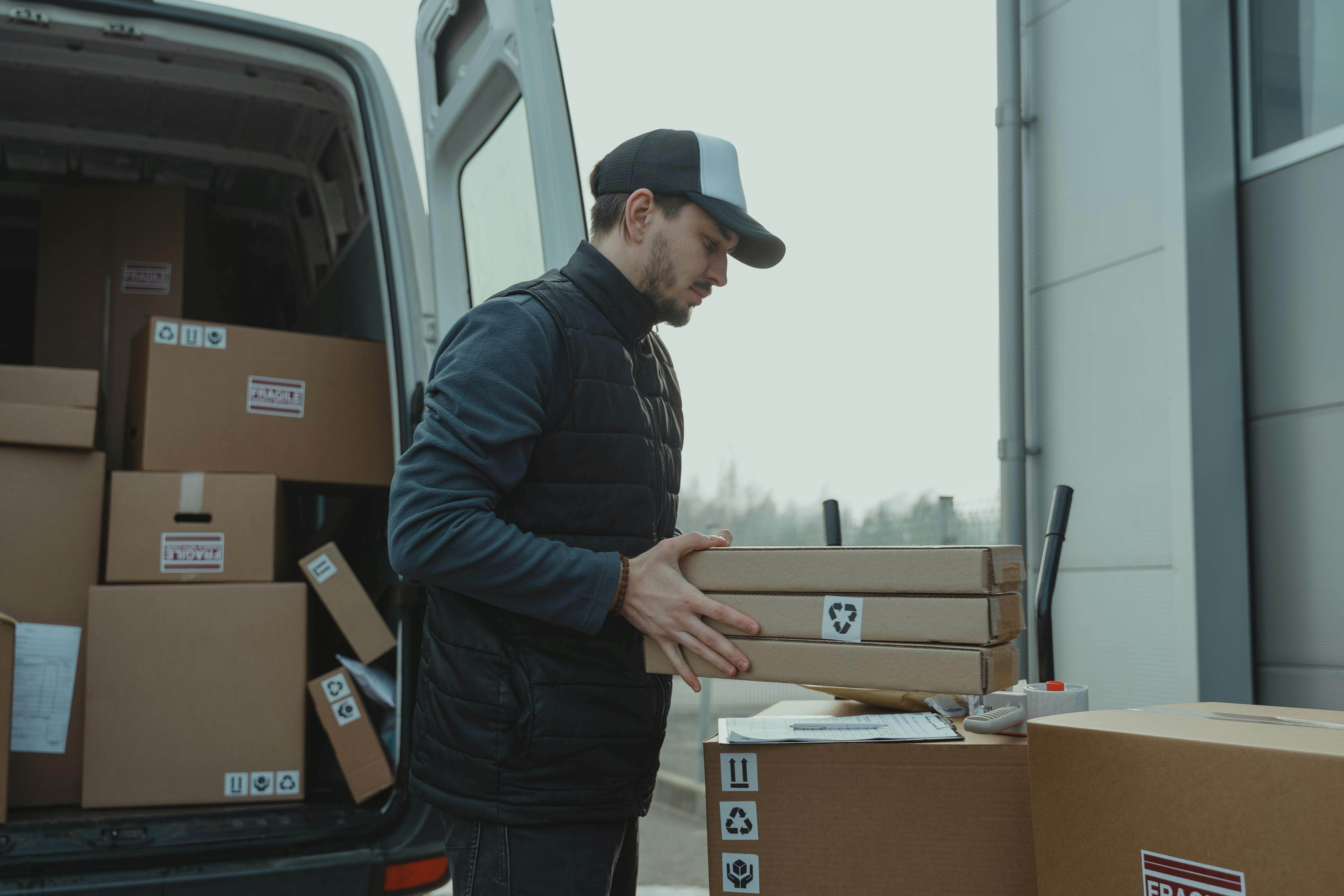
The distinction between delivery speed and dispatch speed often gets overlooked. While final delivery timing depends partly on carrier performance and customer location, dispatch speed remains entirely within the seller's control. Same-day dispatch—processing and shipping orders within hours of receipt—represents the most impactful lever available to ecommerce operations.
Achieving consistent same-day dispatch requires operational excellence across multiple functions. Orders must flow seamlessly from ecommerce platforms into warehouse management systems. Picking operations need sufficient speed and accuracy to process incoming orders within tight windows. Packing stations require organisation and staffing to handle volume fluctuations without delays.
Businesses leveraging AI-powered fulfilment systems can achieve 99%+ on-time dispatch rates through intelligent process automation. These systems optimise pick paths, predict volume patterns, and allocate resources dynamically. The result: orders that enter the system at noon ship by afternoon, giving customers real-time visibility into their purchases moving toward delivery.
The competitive advantage of reliable same-day dispatch compounds over time. Customers learn which brands consistently deliver quickly. They develop preferences that translate into purchasing habits. When deciding between comparable products, delivery speed becomes the tiebreaker. Brands with reputations for fast fulfilment capture disproportionate market share.
Selecting the Right Last Mile Carrier Partnership
Carrier selection directly impacts both speed and customer experience. Different last mile carriers excel in different scenarios—some optimise for cost, others for speed, still others for geographical coverage. Building an effective multi-carrier delivery strategy requires understanding these tradeoffs.
Key evaluation criteria for last mile carriers include average transit times by region, first-attempt delivery success rates, tracking transparency, exception handling capabilities, and integration ease. The cheapest carrier often proves most expensive when factoring in failed delivery costs, customer complaints, and brand damage.
Geographic considerations matter significantly. A carrier offering excellent London coverage may struggle with rural Scottish deliveries. Effective fulfilment partners maintain relationships with multiple carriers, routing packages to whichever option best serves each specific destination. This multi-carrier approach optimises the balance between speed, reliability, and cost.
Real-time visibility through supply chain control tower technology enables proactive exception management. When delays occur, advanced systems detect problems immediately and trigger notifications. This transparency builds customer trust even when things go wrong—people forgive delays they understand far more readily than unexplained silences.
Building Fulfilment Infrastructure for Speed
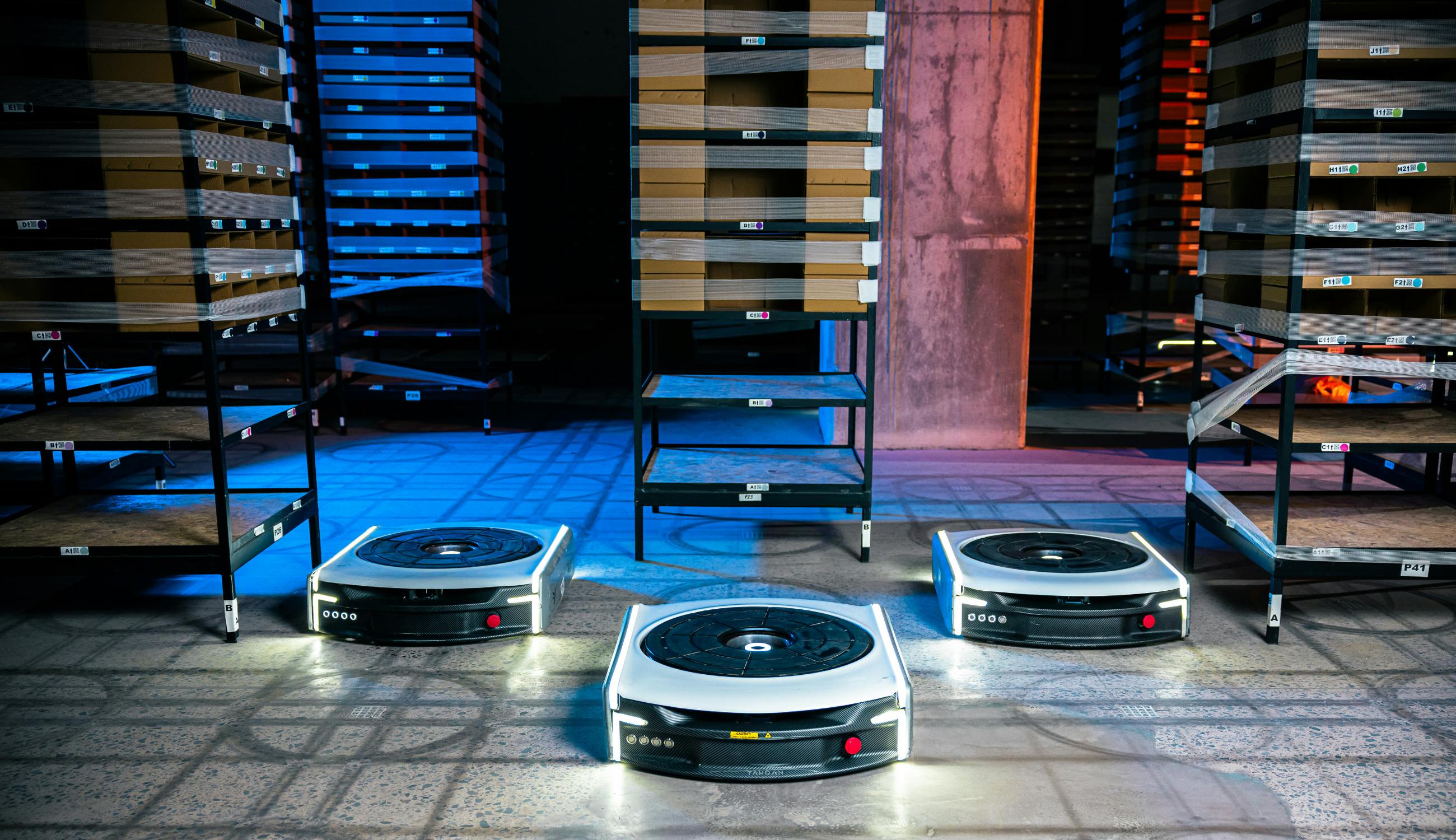
Warehousing strategy fundamentally shapes delivery speed capabilities. Centralised warehouse models offer operational simplicity but create geographic limitations. An ecommerce warehouse located in Birmingham can offer next-day delivery to much of England but struggles to serve Scottish customers quickly.
Distributed fulfilment networks position inventory closer to customer concentrations. By maintaining stock across multiple locations, brands can offer faster delivery to broader populations. However, distributed networks introduce complexity: inventory must be split across locations, requiring sophisticated demand planning to prevent stockouts or overstock situations.
Technology investments that accelerate warehouse operations deliver compounding returns. Goods-to-person robotics eliminate picker travel time—often 60-70% of labour hours in traditional warehouses. Automated sorting systems reduce processing bottlenecks. Integrated systems ensure orders flow from receipt to dispatch without manual handoffs that introduce delays.
For growing ecommerce businesses, the most effective approach often involves partnering with fulfilment specialists who've already built this infrastructure. The smart fulfilment trend of 2026 centres on flexible partnerships that provide enterprise-grade capabilities without massive capital investments.
Managing Ecommerce Order Fulfilment Costs Effectively
Speed and cost need not conflict when operations are properly optimised. The key lies in attacking inefficiencies rather than simply accepting tradeoffs. Many companies achieve faster delivery at lower total costs by rethinking their fulfilment architecture.
Strategic inventory positioning reduces transit distances without expanding warehouse footprints. Analysing customer geography against order patterns reveals opportunities to pre-position popular items closer to demand centres. This approach improves speed while reducing carrier costs—packages travelling shorter distances cost less and arrive faster.
Order accuracy improvements eliminate costly error cycles. Each picking mistake requires reshipping expense, return processing cost, and customer service time. Automated verification systems that catch errors before shipping prevent these expense cascades. Companies achieving 99%+ accuracy rates consistently outperform competitors on both cost and speed metrics.
Packaging optimisation offers another avenue for cost reduction without speed compromise. Right-sizing packages to product dimensions reduces dimensional weight charges. Eliminating unnecessary void fill decreases material costs. Standardised packaging speeds packing operations. These improvements compound across thousands of daily shipments.
Understanding how fixed cost management through pay-as-you-go models works helps ecommerce businesses scale fulfilment capacity flexibly. Rather than investing in warehouse space that sits empty during slow periods, PAYG fulfilment matches costs to actual volumes.
Meeting Express Delivery Expectations Profitably
Express delivery has evolved from premium exception to baseline expectation. While 95% of consumers still prefer free shipping when forced to choose, their definition of acceptable transit times has compressed dramatically. What passed for reasonable three years ago now feels unacceptably slow.
Meeting these expectations profitably requires operational strategies that most businesses haven't implemented. Carrier consolidation programmes aggregate shipments bound for similar destinations, achieving express speeds at economy prices. Strategic carrier selection routes time-sensitive orders through faster networks while standard orders use more economical options.
Cut-off time management significantly impacts express delivery economics. Orders received by noon can ship same-day for next-day delivery through standard services. Orders received at 5 PM require expedited shipping to achieve the same outcome. Clear communication of order cut-offs helps customers self-select into timing that works for their needs and your operations.
Premium express options create revenue opportunities beyond cost recovery. Customers willing to pay for same-day or guaranteed morning delivery represent high-value segments worth cultivating. Offering tiered delivery speeds at transparent prices allows customers to choose their preferred balance of speed and cost.
The Technology Foundation for Speed-First Fulfilment
Modern fulfilment speed depends fundamentally on technology integration. Disconnected systems create handoff delays that accumulate across the order cycle. Each manual intervention introduces latency and error potential. Achieving consistent same-day dispatch requires end-to-end automation.
Order management systems must connect seamlessly with ecommerce platforms, inventory systems, and warehouse management software. When a customer clicks "purchase," that order should flow automatically into picking queues within seconds. Any manual steps between order capture and warehouse release represent speed opportunities waiting to be captured.
The ecommerce logistics solutions that outperform competitors typically feature real-time inventory visibility, automated carrier selection, and integrated tracking communications. These capabilities were once available only to enterprise operations. Now, through partnerships with technology-forward fulfilment providers, businesses of any size can access them.
Machine learning increasingly enhances fulfilment speed through predictive capabilities. Systems learn order patterns and begin preparing anticipated shipments before purchases complete. Inventory automatically repositions based on demand forecasting. Choosing the right smart fulfilment partner becomes a competitive differentiator as these capabilities mature.
Conclusion
The evidence overwhelmingly favours prioritising fulfilment speed over marginal shipping cost reductions. Customer expectations continue rising, and businesses that fail to meet them will steadily lose market share to competitors who deliver faster and more reliably. The investment in fulfilment speed pays returns through improved retention, increased purchase frequency, and sustainable competitive advantage.
Success requires viewing last mile fulfilment not as a cost centre to minimise but as a customer experience asset to optimise. The brands that thrive in the coming years will be those that master this final, critical stretch of the customer journey.
FAQ